Computers and Geosciences · 2023
Deep diffusion models for seismic processing
Why this publication matters
Seismic recordings contain noise, missing information, and unwanted repeated reflections. This work tests whether one family of generative models can help with all three problems. By studying simulated and field data, it establishes a starting point for using diffusion models as versatile tools in seismic processing.
Abstract
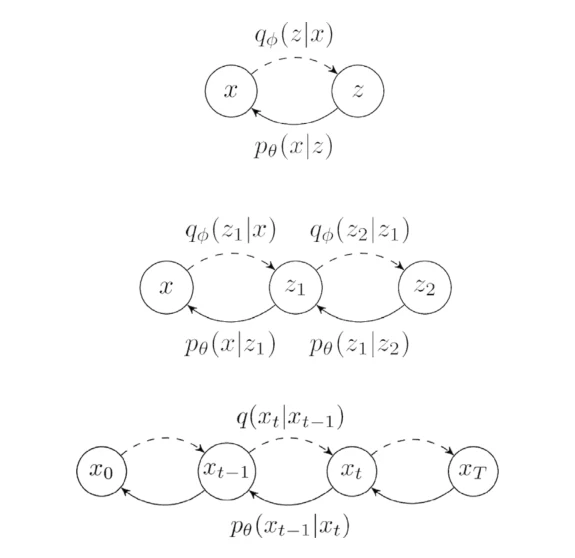
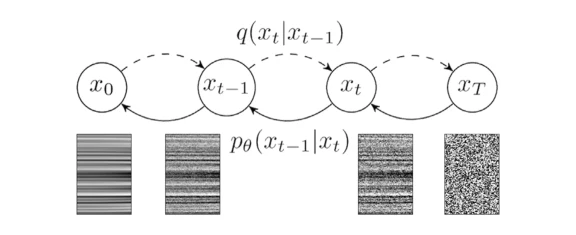
Seismic data processing involves techniques to deal with undesired effects that occur during acquisition and pre-processing. These effects mainly comprise coherent artefacts such as multiples, non-coherent signals such as electrical noise, and loss of signal information at the receivers that leads to incomplete traces. In the past years, there has been a remarkable increase of machine-learning-based solutions that have addressed the aforementioned issues. In particular, deep-learning practitioners have usually relied on heavily fine-tuned, customized discriminative algorithms. Although, these methods can provide solid results, they seem to lack semantic understanding of the provided data. Motivated by this limitation, in this work, we employ a generative solution, as it can explicitly model complex data distributions and hence, yield to a better decision-making process. In particular, we introduce diffusion models for three seismic applications: demultiple, denoising and interpolation. To that end, we run experiments on synthetic and on real data, and we compare the diffusion performance with standardized algorithms. We believe that our pioneer study not only demonstrates the capability of diffusion models, but also opens the door to future research to integrate generative models in seismic workflows.
Figures
Cite this paper
@article{durall2023deepdiffusionmodels25,
  title = {{Deep diffusion models for seismic processing}},
  author = {Ricard Durall and Ammar Ghanim and Mario Fernandez and Norman Ettrich and Janis Keuper},
  journal = {Computers \& Geosciences},
  year = {2023},
  url = {https://www.sciencedirect.com/science/article/pii/S009830042300081X}
}
Figures and abstract are reproduced from the linked research sources. Credit remains with the authors and publishers.